
Deciding Where AI Belongs
- Distinguish between assisting, automating and redesigning work.
- Identify where human judgment, relationships and accountability need to remain.
AI Capability SeriesAI Architect
Redesign cross-functional work around AI to create greater business value.
Build the capability to identify where AI can create meaningful value, redesign how work flows across teams and functions, and turn new possibilities into responsible, workable business processes.
The opportunity with AI extends beyond making individual tasks faster. Greater value can emerge when organisations step back and reconsider how work flows across teams, decisions and systems.
That starts with choosing the right processes to change. It also requires sound judgment about what AI should handle, where people remain accountable and how a redesigned process will affect customers, employees and business outcomes.
AI Architect develops the capability to identify high-value opportunities and turn them into responsible AI-enabled ways of working.
By the end of the course, participants will be able to:
Distinguish between work that should remain human-led, be AI-assisted, be automated or be reconsidered more fundamentally.
Identify processes where AI can create meaningful value, weighing feasibility, risk and the impact on people.
Rethink cross-functional processes around the business outcome, preserving human judgment where it matters.
Prototype agent-supported processes and determine where people need to approve, challenge or stop the work.
Consider how process design may affect behaviours, incentives, customers and colleagues before implementation.
Assess the true costs and potential value of the redesigned process, and shape a practical pilot that can be tested and adjusted.
Engage business leaders, specialists and affected teams so that the process can move from concept into action.
Explore the key areas involved in redesigning business processes around AI.
The experience combines leadership assessment, structured preparation, three days of in-person learning, workplace application and follow-up support.
AI Architect is relevant to professionals who own, shape or influence business processes and are exploring where AI can create greater value.
Improve processes that span multiple teams, hand-offs or decision points.
Examples: Process Owners, Operations Managers, Shared Services and Service Delivery Managers.
Identify opportunities to rethink workflows and improve how a function delivers.
Examples: Heads of Function, Operational Excellence Leads and Continuous Improvement Leads.
Connect business priorities with practical process design and new ways of working.
Examples: Business Analysts, Digital Business Partners, and HR, Finance or Supply Chain Leads.
Participants should already be comfortable using AI in their own work and have some responsibility for shaping processes that extend beyond individual tasks. Deep technical or coding expertise is not required.
Begin by identifying where AI can make a meaningful difference before deciding what to build.
Use the Korn Ferry leadership assessment to identify strengths and development priorities relevant to leading process innovation and influencing across boundaries.
Prototype agents and workflows using practical AI tools while concentrating on process design, business judgment and human oversight.
Build approval points, challenge mechanisms and clear accountability into the process from the beginning.
Assess potential business value alongside risk, operating cost, workforce impact and unintended consequences.
Develop a value case and practical pilot approach that can be taken forward after the workshop, with follow-up support through the Ask Me Anything session.
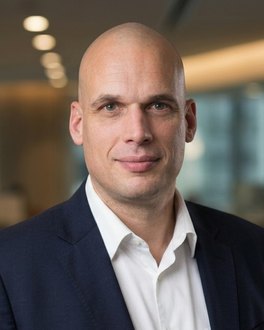
Enterprise Data & AI Leader
LinkedInprofile of Daniel Piatkowski (opens in a new tab)
Daniel Piatkowski is an enterprise data and AI leader with over 15 years of experience in data strategy, advanced analytics, digital transformation and AI adoption. He has held leadership and specialist roles across the telecommunications and technology consulting sectors, bringing extensive experience in designing and implementing data and AI solutions in complex business environments.
His expertise spans enterprise AI strategy, data architecture, process innovation and the practical integration of emerging technologies into business operations. He has worked at the intersection of technology and business, helping organisations translate AI opportunities into scalable solutions that improve operational efficiency, decision-making and business performance.
As a practitioner and facilitator, Daniel brings real-world perspectives on the opportunities and challenges of enterprise AI adoption. He draws on his experience to help participants critically evaluate business processes, identify high-value AI use cases and develop practical approaches to designing and implementing AI-enabled workflows.
Eligible Singapore Citizens and Permanent Residents may receive up to 90% course fee funding for selected courses. The amount payable depends on whether the course is self-sponsored or company-sponsored and the participant’s eligibility.
Course feeS$4,125 before funding and GST
| Participant Eligibility | Self-Sponsored | Company-Sponsored | |
|---|---|---|---|
| SME SMESmall and Medium Enterprises (SMEs) are companies that meet the government’s prevailing SME eligibility criteria. Eligible SMEs may qualify for enhanced course fee subsidies when sponsoring employees for training. | Non-SME | ||
| Singapore Citizen, aged 40 and above | Self-SponsoredS$523.8890% funding applied90% Funding AppliedIncludes 70% baseline course fee funding and an additional 20% under the Mid-Career Enhanced Subsidy (MCES) for eligible Singapore Citizens aged 40 and above. | Company-Sponsored · SME SMESmall and Medium Enterprises (SMEs) are companies that meet the government’s prevailing SME eligibility criteria. Eligible SMEs may qualify for enhanced course fee subsidies when sponsoring employees for training.S$523.8890% funding applied90% Funding AppliedIncludes 70% baseline course fee funding and an additional 20% under Enhanced Training Support for SMEs (ETSS), where the employer and participant meet the applicable eligibility criteria. | Company-Sponsored · Non-SMES$523.8890% funding applied90% Funding AppliedIncludes 70% baseline course fee funding and an additional 20% under the Mid-Career Enhanced Subsidy (MCES) for eligible Singapore Citizens aged 40 and above. |
| Singapore Citizen below 40 / Permanent Resident | Self-SponsoredS$1,348.8870% funding applied70% Funding AppliedThe displayed fee reflects 70% course fee funding for eligible Singapore Citizens and Permanent Residents, subject to prevailing funding conditions. | Company-Sponsored · SME SMESmall and Medium Enterprises (SMEs) are companies that meet the government’s prevailing SME eligibility criteria. Eligible SMEs may qualify for enhanced course fee subsidies when sponsoring employees for training.S$523.8890% funding applied90% Funding AppliedIncludes 70% baseline course fee funding and an additional 20% under Enhanced Training Support for SMEs (ETSS), where the employer and participant meet the applicable eligibility criteria. | Company-Sponsored · Non-SMES$1,348.8870% funding applied70% Funding AppliedThe displayed fee reflects 70% course fee funding for eligible Singapore Citizens and Permanent Residents, subject to prevailing funding conditions. |
| International Participant | S$4,496.25No government funding | ||
Government support is available through course fee subsidies and additional credits. The schemes below explain how eligible individuals and employers may benefit.
These are reflected in the applicable payable fees shown above.
Eligible Singapore Citizens and Permanent Residents may receive up to 70% course fee funding for SWDA-supported courses, subject to prevailing eligibility requirements.
View scheme detailsfor Skills and Workforce Development Agency (SWDA) Funding (opens in a new tab)Singapore Citizens aged 40 and above may qualify for enhanced course fee subsidies of up to 90%, inclusive of baseline funding.
View scheme detailsfor Mid-Career Enhanced Subsidy (MCES) (opens in a new tab)Eligible SMEs that fully sponsor their Singapore Citizen or Permanent Resident employees for SWDA-supported courses may receive up to 90% course fee funding.
View scheme detailsfor Enhanced Training Support for SMEs (ETSS) (opens in a new tab)These may help eligible individuals and employers further offset their remaining training costs.
Singapore Citizens aged 25 and above may use their available SkillsFuture Credit (Base Tier and, where eligible, Mid-Career Tier) to offset payable course fees for eligible courses.
View scheme detailsfor SkillsFuture Credit (for Individuals) (opens in a new tab)Eligible employers may utilise their SFEC to offset out-of-pocket costs for supported courses, subject to prevailing scheme requirements.
View scheme detailsfor SkillsFuture Enterprise Credit (SFEC) (opens in a new tab)AI Architect is intended for professionals who own, shape or influence business processes and need to determine where AI can improve how work gets done.
Typical participants include Process Owners, Operations Managers, Heads of Function, Operational Excellence and Continuous Improvement Leads, Shared Services leaders, Business Analysts, Digital Business Partners, and functional leaders in areas such as HR, Finance and Supply Chain.
No. Coding or specialist technical expertise is not required.
Participants will prototype AI-enabled workflows and agents using practical tools, while the main emphasis is on business process design, judgment, value creation and human oversight.
Participants should already be comfortable using AI in their own work, at around the level developed in AI User: Reinventing Your Work and Impact.
The course is most relevant for those who also own, influence or shape processes that span teams or functions.
The experience includes a Korn Ferry leadership assessment aligned to the AI-Ready Leader success profile and virtual Group Debrief, approximately three hours of pre-work, a three-day in-person workshop, a short post-course assessment, and a virtual Ask Me Anything session approximately two weeks later.
Participants work through a business process from opportunity identification to redesign, prototype development and value case.
This includes mapping and prioritising processes, redesigning a cross-functional workflow, building and testing agent-supported processes, examining unintended consequences and developing a practical pilot proposal.
The core workshop uses a shared business case so participants can work through the full redesign process together.
The approach can then be applied to relevant processes back at work, with the Ask Me Anything session providing an opportunity to discuss what emerges during application.
The course is most relevant to processes that span teams, functions or decision points, particularly where AI could change how work is allocated, coordinated or governed.
Participants learn how to identify where AI can create value before deciding what, if anything, should be redesigned.
Yes. Participants prototype agent-supported workflows during the course.
The emphasis is on how agents fit into the business process, where human judgment and approval need to remain, and how value, risk and accountability are built into the design.
Traditional process improvement typically focuses on improving an existing process.
AI Architect also considers whether AI creates an opportunity to rethink the process more fundamentally – including how work is allocated between people and AI, where decisions sit and whether parts of the process should be redesigned altogether.
General AI training typically develops understanding or proficiency in using AI tools.
AI Architect focuses on deciding where AI belongs within business processes, redesigning how work flows across teams and translating those choices into workable AI-enabled processes.
Participants leave with practical approaches to:
| Intake | Key dates | ||
|---|---|---|---|
| Assessment Debrief | Workshop | Ask Me Anything | |
| March 2027 | 19 Feb | 1–3 Mar | 19 Mar |
| April 2027 | 9 Apr | 21–23 Apr | 7 May |
| September 2027 | 3 Sep | 15–17 Sep | 1 Oct |
Different responsibilities call for different capabilities. Explore the course aligned to how participants are expected to contribute in an AI-enabled organisation.
Reinventing Your Work and Impact
Use AI purposefully and responsibly to improve individual work and impact.
Explore courseElevating Team Performance
Lead AI-enabled teams to strengthen performance, ways of working and decision-making.
Explore courseInnovating Business Processes
Redesign business processes around AI to create value while preserving human judgment, trust and control.
Delivering Enterprise Value
Build readiness, mobilise stakeholders and drive sustained AI adoption across the organisation.
Explore courseJoin an upcoming public intake or speak with Korn Ferry Academy about bringing AI Architect: Innovating Business Processes to your organisation.