


Performance management should help people understand what is expected of them, how they are doing, and where they can improve. Yet too often, it becomes a process to complete rather than a meaningful conversation about performance and development.
Performance Management for the Evolving Workforce is a one-day, in-person course that helps managers make performance management a more continuous, constructive and engaging part of how they lead their teams.
Through expert insights, collaborative discussions and scenario-based exercises, participants will explore how performance management practices are evolving and what this means for managers today. You’ll learn how to set meaningful goals, give feedback that supports improvement, evaluate performance against clear and consistent standards, and conduct performance conversations that are fair, constructive and useful.
A key focus of the course is building trust and ownership within teams. You’ll explore how regular check-ins, recognition and constructive coaching can strengthen both engagement and accountability. As teams become increasingly diverse in career stage, experience and working arrangements, you’ll practise adapting performance conversations to the individual, rather than relying on assumptions about age or generation. You’ll also learn how to address underperformance early and handle conversations about performance ratings and related rewards with greater clarity and confidence.
By the end of the course, you’ll have practical tools and techniques to make performance management an ongoing part of effective leadership, helping your team stay aligned, develop and perform at their best.
This course will equip you to:
This course is designed for people managers, team leaders, project managers and HR professionals involved in setting goals, giving feedback, evaluating performance or conducting performance reviews.
It is particularly relevant for managers looking to strengthen the quality and consistency of performance conversations, address underperformance more effectively, and build greater ownership and accountability within their teams.
To successfully complete the Performance Management for the Evolving Workforce course, participants must meet the following requirements:
Participants who meet these requirements will receive a digital Certificate of Completion from Korn Ferry Academy.
Administrative details on attendance tracking, assessment, and funding eligibility can be found in our Terms & Conditions and in the course confirmation email sent to participants.
Full Course Fee
$1,050* (before funding and GST)
Course Fee Payable
| Participant Profile | Self-sponsored | Company-sponsored | |
|---|---|---|---|
| SME | Non-SME | ||
| Singapore Citizen ≥ 40 years old | $133.35 (after 70% SWDA funding, with additional 20% MCES subsidy) |
$133.35 (after 70% SWDA funding, with additional 20% ETSS subsidy) |
$133.35 (after 70% SWDA funding, with additional 20% MCES subsidy) |
| Singapore Citizen < 40 years old / Permanent Resident | $343.35 (after 70% SWDA funding) |
$133.35 (after 70% SWDA funding, with additional 20% ETSS subsidy) |
$343.35 (after 70% SWDA funding) |
| International Participant | $1,144.50 (no funding) |
$1,144.50 (no funding) |
$1,144.50 (no funding) |
The payable course fees reflect the amount after approved course fee grant and subsidies are applied. All fees are in Singapore Dollars (SGD) and inclusive of 9% GST.
SWDA Funding
Eligible Singapore Citizens (SCs) and Singapore Permanent Residents (PRs) may receive funding of up to 70% of course fees for SWDA-supported courses. Funding levels, eligibility and payable fees are subject to prevailing funding policies at the point of course commencement.
Mid-Career Enhanced Subsidy (MCES)
SCs aged 40 and above may receive up to 90% course fee funding for SWDA-supported courses (subject to meeting baseline funding conditions).
More information >
Enhanced Training Support for SMEs (ETSS)
Eligible SMEs that fully sponsor their SC/PR employees for SWDA-supported courses may receive up to 90% course fee funding.
More information >
SkillsFuture Enterprise Credit (SFEC)
Eligible employers may utilise their SFEC to offset up to 90% of out-of-pocket costs for supported courses.
More information >
SkillsFuture Credit (for Individuals)
SCs aged 25 and above may use their SkillsFuture Credit (Base Tier and, where eligible, Mid-Career Tier) to offset payable course fees for eligible courses.
More information >
26 Feb 2027
21 Jul 2027
This course is designed for people managers, HR professionals, and team leaders navigating the changing dynamics of today’s workforce. It is ideal for those who want to move beyond traditional performance reviews and drive performance through meaningful conversations, continuous feedback, and adaptive goal-setting that inspires accountability and growth.
You will gain a clear understanding of the modern performance management cycle, from setting expectations to coaching, evaluation, and reward. The course equips you with practical tools to set SMART goals, give and receive feedback effectively, identify development gaps, and connect performance with meaningful recognition. You will also explore how to build a feedback culture that supports engagement and performance, helping employees stay motivated, aligned, and ready to grow.
There are no prerequisites. The course is suitable for professionals at all levels who are responsible for managing, coaching, or assessing employee performance.
You will learn through a one-day, hands-on workshop that balances content, examples, and context with active engagement. The course includes live discussions, case examples, and simulations that reflect real workplace scenarios. Facilitators bring deep consulting and HR experience to guide you through frameworks and conversations that make performance management both practical and impactful.
You will work on real performance management challenges from your own organisation, mapping out key stages and touchpoints in the cycle. Through guided practice, you will apply goal-setting and feedback techniques, role-play critical performance conversations, and design strategies that link performance outcomes to development and rewards. Each exercise helps you apply new approaches immediately and effectively within your team.
This course focuses on transforming performance management into a dynamic, continuous process suited to today’s evolving workforce. It emphasises systems and practices that modernise your approach, integrate regular feedback, and align performance with business goals.
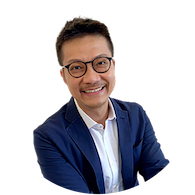

Edwin Sim has more than 25 years of experience in Singapore and across Asia as an educator and leader in law enforcement, ICT, and human and organisational development. He has a strong track record of creating tailored learning interventions that drive organisational change and transformation.
As the founder of 5hue and a former leader at top training and consultancy firms in Singapore, Edwin combines entrepreneurial insight with deep practitioner expertise. He has partnered with over 200 organisations to deliver impactful programmes in leadership, communication, teamwork, organisational change, and sales and service improvement.
Recognised for his ability to connect theory with practice, Edwin equips leaders with practical strategies to achieve organisational goals and build resilient, high-performing teams that thrive in complex environments.
“I appreciate the hands-on learning activity for setting SMART goals. This is immediately practical for my work.”
“The most valuable aspect of the course was its emphasis on adapting performance frameworks to meet the changing expectations and needs of today’s diverse and dynamic workforce.The course highlighted how traditional, one-size-fits-all approaches are no longer effective, and underscored the importance of continuous feedback, coaching, and personalized development plans. I found this particularly relevant as it aligns with the shift towards more agile, empathetic, and growth-oriented leadership—key factors in motivating and retaining talent in the current work environment.”
“Facilitator was able to share his own experiences and as each of the participant were from different induestry, he was able to relate and engage with each of us on our challenges and experiences.”